In Yerevan, a car of the Range Rover make exploded while in motion. There are injured people. @bagramyan26
Latest city publications
Yerevan — news on the map
Telegram reports linked to Yerevan. The latest report on this page was published on 28 November 2026.
Latest publication in this selection: MSK (UTC+3)
Place. Source. Context.
Open a report on the map or narrow your selection by topic.
- Publications in selection
- 3
- Matching your filters
- 3
- Sources in selection
- 3
Loading the map…
The map is currently unavailable. Read the publications
Publications on the map
Select a marker or a list item to read the publication.
In this selection
A marker indicates the place mentionedCity and area coordinates are approximate.How locations are determined
Find your topic
Topics from the past 7 days
Reports from sources
City news feed
The feed below shows this page’s publications. Map filters apply to the selection loaded on the map.
-
-
⚫️ 129 scientists left the five MIPT schools for abroad. The university rector met with alumni in Yerevan Before the war, at least 577 researchers worked in MIPT’s five schools. In addition to the 129 who left abroad, by August 2026 another 158 had moved to other research centers in Russia, T-invariant calculated. In summer 2026, MIPT rector Dmitry Livanov himself traveled to Yerevan for a meeting with alumni. According to T-invariant, this was already the third overseas alumni meeting…
Read full publicationCollapse publication
⚫️ 129 scientists left the five MIPT schools for abroad. The university rector met with alumni in Yerevan Before the war, at least 577 researchers worked in MIPT’s five schools. In addition to the 129 who left abroad, by August 2026 another 158 had moved to other research centers in Russia, T-invariant calculated. In summer 2026, MIPT rector Dmitry Livanov himself traveled to Yerevan for a meeting with alumni. According to T-invariant, this was already the third overseas alumni meeting organized by MIPT’s administration. Livanov gave a presentation on the “Big Phystech” project. The program included a separate discussion of how alumni could participate in the university’s projects. The publication notes that at the meeting in Yerevan, Russia’s war against Ukraine “became a subject of silence.” “Phystech lives its protected life,” one participant told journalists anonymously. ⚫️ “People knew why they were coming there. They came to discuss how we would survive and develop, and what needed to be done. It was a strategic session,” T-invariant editor-in-chief Olga Orlova said on air on Echo. “It is hard to imagine Sadovnichy [rector of Moscow State University], Kropachev [rector of St Petersburg State University], or Tor-kunov [rector of MGIMO] going to some neutral country, to Cyprus or somewhere else, to meet with the community and discuss the strategic development of their university.” According to her, Phystech had maintained ties for decades with alumni who built successful careers as scientists or entrepreneurs in the West. After the war began, the university pursued a policy of maintaining ties with those who had left Russia after the invasion as well. Now, Orlova says, nobody is leaving Phystech for the West anymore, nor are people leaving other universities and academic institutes, “because there is nowhere to go.” ⚫️ Watch Olga Orlova’s full comment on our YouTube channel or read it on the Echo website @echoonline_news -
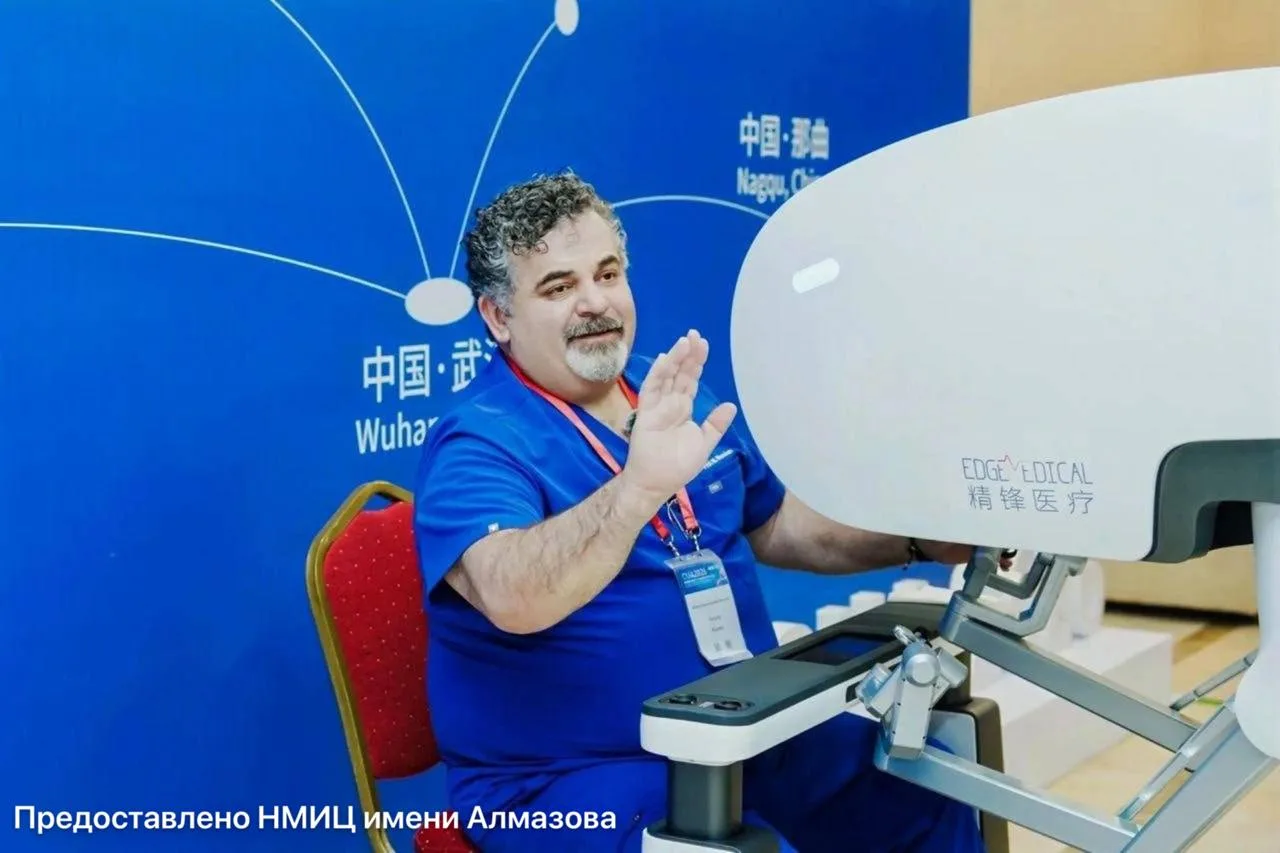
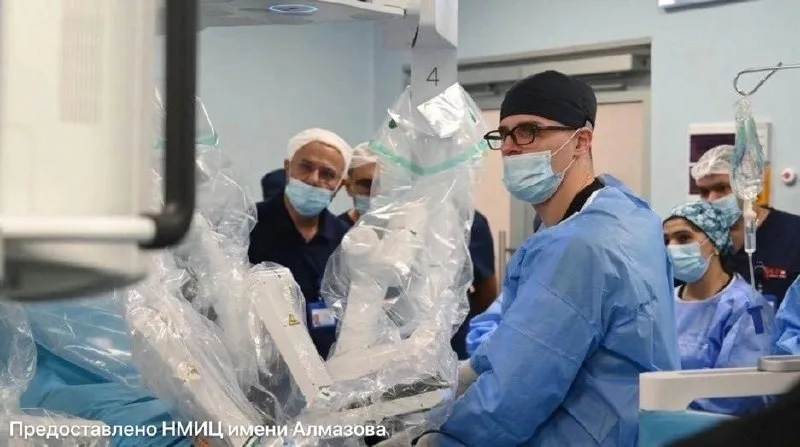
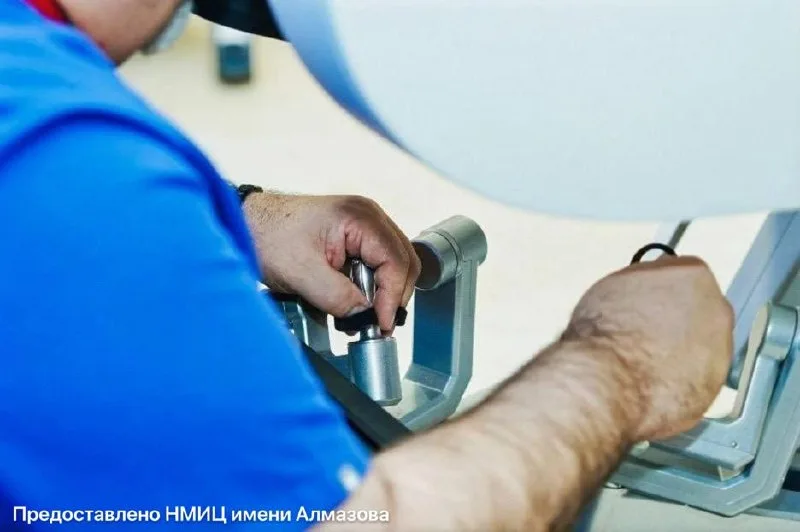
A St. Petersburg surgeon operated on a patient 6,000 kilometers away. At one of the world's largest urology congresses in Wuhan, a session in the format of international telesurgery was held for the first time: doctors controlled robots from China, while patients were in other countries. Four surgeons operated live. Chinese doctor Yang Jun performed a telesurgery on a patient in China, Spanish professor and president of the European Association of Urology's robotic urology section Alberto…
Read full publicationCollapse publication
A St. Petersburg surgeon operated on a patient 6,000 kilometers away. At one of the world's largest urology congresses in Wuhan, a session in the format of international telesurgery was held for the first time: doctors controlled robots from China, while patients were in other countries. Four surgeons operated live. Chinese doctor Yang Jun performed a telesurgery on a patient in China, Spanish professor and president of the European Association of Urology's robotic urology section Alberto Breda operated on a patient in the Canary Islands, and Evangelos Liatsikos, chair of the European School of Urology, operated on a patient in Athens. Mikhail Mosoyan, head of the Robotic Surgery Center at the Almazov National Medical Research Centre, performed robot-assisted radical prostatectomy on a patient in Yerevan. “This is a complex operation in itself. We had to choose a backup patient because the cardiologists told the first one that he could not undergo surgery yet. The case turned out to be technically difficult because of the large prostate volume, narrow pelvis and serious accompanying cardiovascular condition. The operation lasted 2 hours and 20 minutes. For international experience, this is a good time. But for us, it was practically twice as long. If the operation is not remote, we do it in an hour,” Mikhail Mosoyan told Fontanka. Read our article about the future of telesurgery and the development of this field in St. Petersburg. Telegram | All Fontanka channels | Max