Angara Region. The week’s results The week’s main newsmaker was Governor Igor Kobzev. First, the regional head agreed with Dmitry Kudelkin, CEO of the S7 Group, on launching direct air service between Ust-Kut and Novosibirsk. Clearly, the specific agreement, which took place at the Transport of Russia forum, was preceded by some communication between the regional government and one of the major federal carriers. Kobzev noted that the appearance of a flight to Novosibirsk from Ust-Kut…
Latest city publications
Bratsk — news on the map
Telegram reports linked to Bratsk. The latest report on this page was published on 27 November 2026.
Latest publication in this selection: MSK (UTC+3)
Open a report on the map or narrow your selection by topic.
- Publications in selection
- 3
- Matching your filters
- 3
- Sources in selection
- 3
Loading the map…
The map is currently unavailable. Read the publications
Publications on the map
Select a marker or a list item to read the publication.
In this selection
Find your topic
Topics from the past 7 days
Reports from sources
City news feed
The feed below shows this page’s publications. Map filters apply to the selection loaded on the map.
-
CulturePlannedAngara Region. The week’s results The week’s main newsmaker was Governor Igor Kobzev. First, the regional head agreed with Dmitry Kudelkin, CEO of the S7 Group, on launching direct air service between Ust-Kut and Novosibirsk. Clearly, the specific agreement, which took place at the Transport of Russia forum, was preceded by some communication between the regional government and one of the major federal carriers. Kobzev noted that the appearance of a flight to Novosibirsk from Ust-Kut “increases transport accessibility for the northern territories of Irkutsk Region.” While in Moscow, the Irkutsk governor attended a meeting of the Federation Council Committee on Federal Structure, Regional Policy, Local Self-Government and Northern Affairs. Igor Ivanovich spoke in detail about the Angara Region’s experience of working with the state development corporation PJSC DOM.RF. Kobzev listed the main points: effective use of integrated territorial development projects, targeted improvement of public spaces, and detailed development of master plans. The head of the region also spoke separately about a unique lending program for private investors who take on the reconstruction of cultural heritage sites. Kobzev devoted time to the “international vector”: the governor met with Enkhtuvshin Zolboo, deputy head of the Administration of the President of Mongolia. The meeting concerned problems of protecting Lakes Baikal and Khövsgöl. Igor Ivanovich remarked that their “common tectonic origin, similar water regime, and crystal-clear water” link the two sites, and that the factor of “natural unity” makes preserving both lakes an “unconditional priority and common duty.” In addition to Baikal and Khövsgöl, Kobzev and Zolboo discussed joint projects in the agro-industrial complex and forestry, emphasizing that these sectors create “food and environmental stability for future generations.” Meanwhile, within the region, people are thinking about the future generation in a rather peculiar way. For example, in Bratsk, local authorities decided to cut spending on maintaining the Museum of Political Exile, one of the libraries, and the city brass band to avoid a deficit in next year’s budget. The budget cuts will free up 29 million rubles. There are serious questions for the municipal administration: is culture the only budget item that can be put “on the chopping block,” and why have the museum, orchestra, and library displeased the city authorities so much? The truth is somewhere nearby.
-
Utilities and communicationsResolved
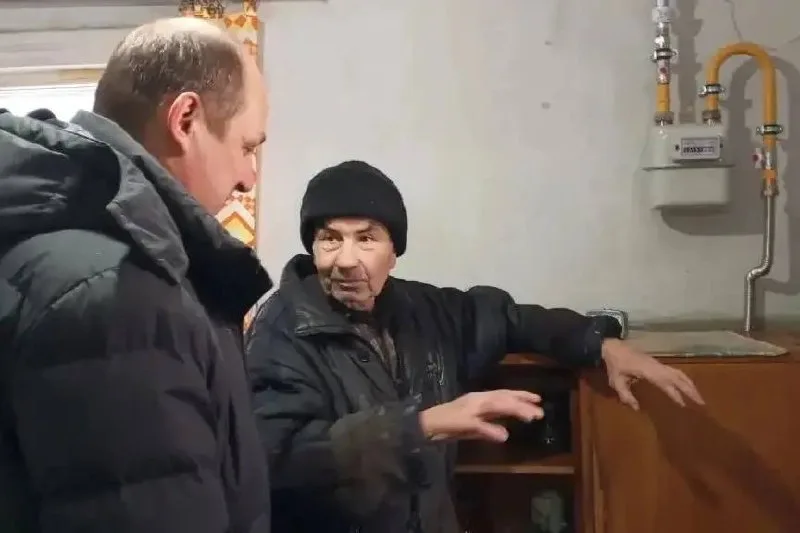
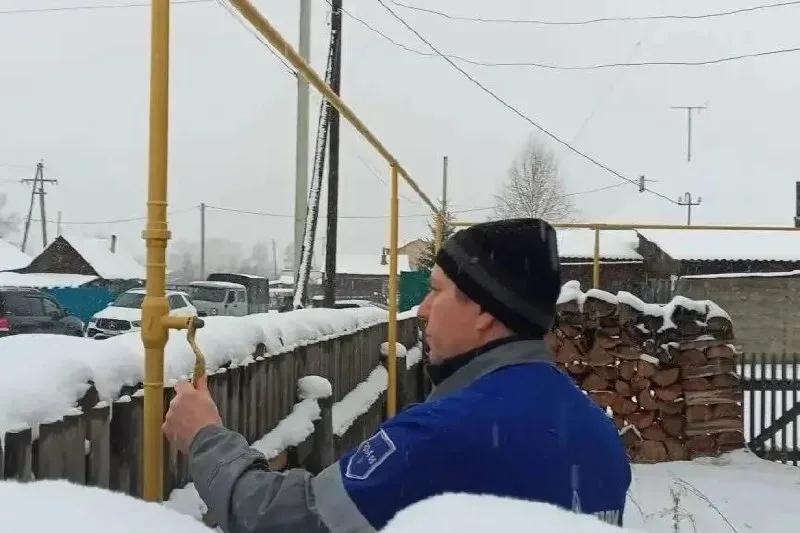
A two-year project to connect private homes that had previously been heated with coal or firewood to gas has been completed in Bratsk. In 2025–2026, a total of 885 households in the city’s Pravoberezhny District were switched to gas, 533 of them this year. Bratsk Mayor Alexander Sergeyevich Dubrovin visited several families and spoke with residents. Everyone unanimously noted the benefits and convenience of gas heating: the equipment works reliably, the house is clean, and the desired…
Read full publicationCollapse publication
A two-year project to connect private homes that had previously been heated with coal or firewood to gas has been completed in Bratsk. In 2025–2026, a total of 885 households in the city’s Pravoberezhny District were switched to gas, 533 of them this year. Bratsk Mayor Alexander Sergeyevich Dubrovin visited several families and spoke with residents. Everyone unanimously noted the benefits and convenience of gas heating: the equipment works reliably, the house is clean, and the desired temperature is reached in a couple of minutes. Bratsk was one of the first to join the federal “Clean Air” project under the national “Environmental Well-Being” project. This made it possible to attract federal funds — more than 332 million rubles over two years. Including regional (17.79 million rubles) and local (3.22 million rubles) co-financing, the total costs exceeded 355 million rubles. A dedicated department was created in the city administration to implement the project. Since the new way of heating was unfamiliar to residents, administration staff conducted extensive outreach: they held meetings, visited homes, and then helped those who decided to install gas with legal matters. Results: • Environment: emissions from stoves and boilers fell by 1,336 tonnes, including 30 tonnes of particularly hazardous substances. The air in the city became noticeably cleaner. • Everyday life: for residents, this is a simple convenience — no more carrying firewood and coal, stoking the stove, and taking out ash. In addition, gas heating is much more economical. I thank everyone who took part in this work. I am glad that through the joint efforts of authorities at all levels, supervisory bodies, and Gazprom structures, we have made people’s lives more comfortable. Photo: Bratsk city administration press service My channel on MAX | VK | OK | Zen -
CulturePlanned
Bratsk city administration proposes closing the Museum of the History of Political Exile to save money Bratsk city administration (Irkutsk Oblast) is proposing to close the city Museum of the History of Political Exile to save budget funds. Deputy Mayor for Social Affairs Marina Zubakova said this at a city council meeting on Tuesday, 7x7. Horizontal Russia reports, citing local Telegram channels. The closure is expected to save 1.13 million rubles in 2027 and 3.4 million rubles annually…
Read full publicationCollapse publication
Bratsk city administration proposes closing the Museum of the History of Political Exile to save money Bratsk city administration (Irkutsk Oblast) is proposing to close the city Museum of the History of Political Exile to save budget funds. Deputy Mayor for Social Affairs Marina Zubakova said this at a city council meeting on Tuesday, 7x7. Horizontal Russia reports, citing local Telegram channels. The closure is expected to save 1.13 million rubles in 2027 and 3.4 million rubles annually thereafter. They plan to save about 71 million rubles a year across cultural institutions. “This is a terrible crime, because we understand: political exile and that history are the history of our city,” Zubakova said. She promised that the historic building and the museum’s collections would be preserved. The museum opened in 1989, and its building is a locally designated historic monument. According to 7x7’s estimates, since Russia’s full-scale invasion of Ukraine began, at least 26 memorial sites to the repressed have been destroyed or damaged in the country. @echoonline_news